Fall Prevention Opportunities

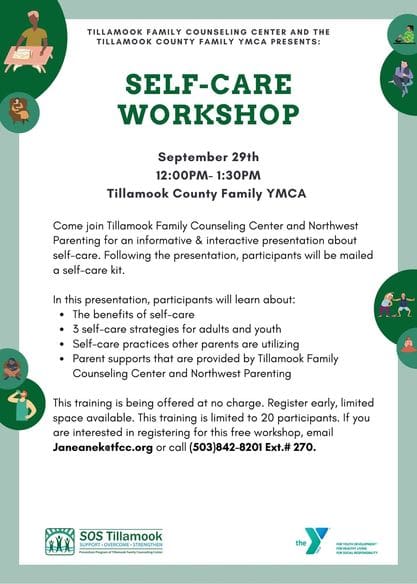
Self Care Workshop (in-person), September 29th

Come join Tillamook Family Counseling Center for an informative & interactive presentation about self-care. This presentation will be offered in person at the Tillamook County Family YMCA on September 29th from 12:00-1:30PM. In this presentation, participants will learn about: the benefits of self-care, 3 self-care strategies for adults and youth, self-care practices other parents are utilizing, and Parent supports that are provided by Tillamook Family Counseling Center and Northwest Parenting. To learn more email Janeanek@tfcc.org or AngelicaO@TFCC.org.

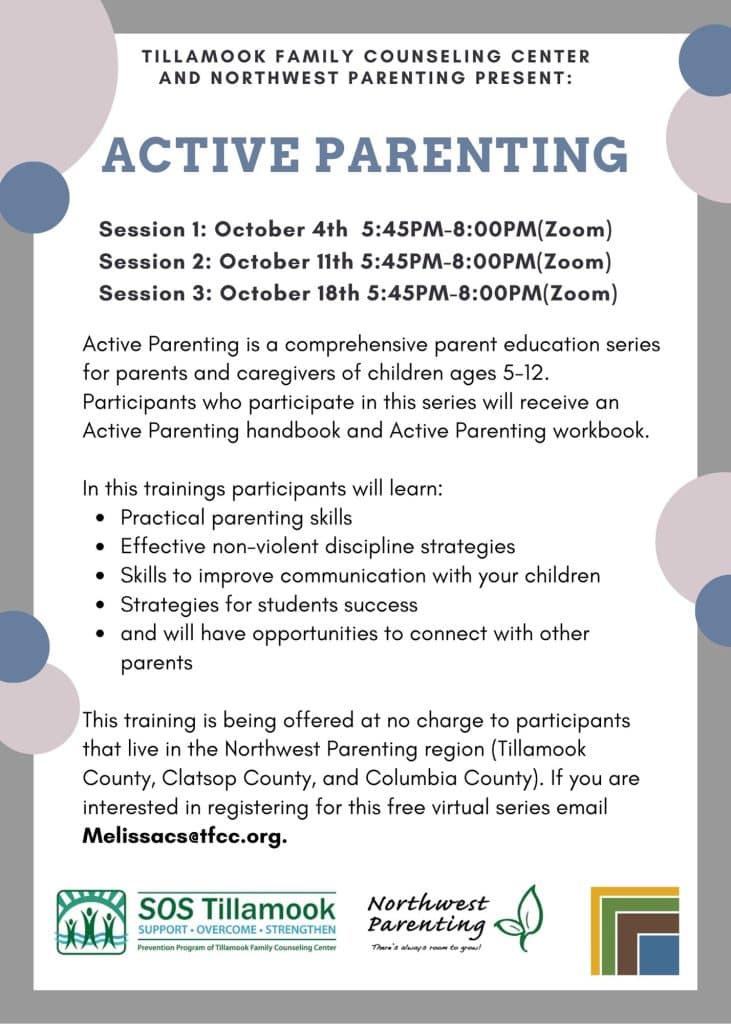
Active Parenting Series, October 4th, 11th, & 18th

Tillamook Family Counseling Center will once again offer a free virtual Active Parenting class series. In this series parents and caregivers will learn practical parenting tips, healthy discipline methods, and information on how to develop positive qualities in children. This curriculum is designed for parents and caregivers of children ages 5-12. This class series will take place Wednesdays from 5:45-8:00PM(October 4th – October 18th). If you’d like to register or have questions about this free series please contact Mis Carlson-Swanson at Melissacs@tfcc.org.

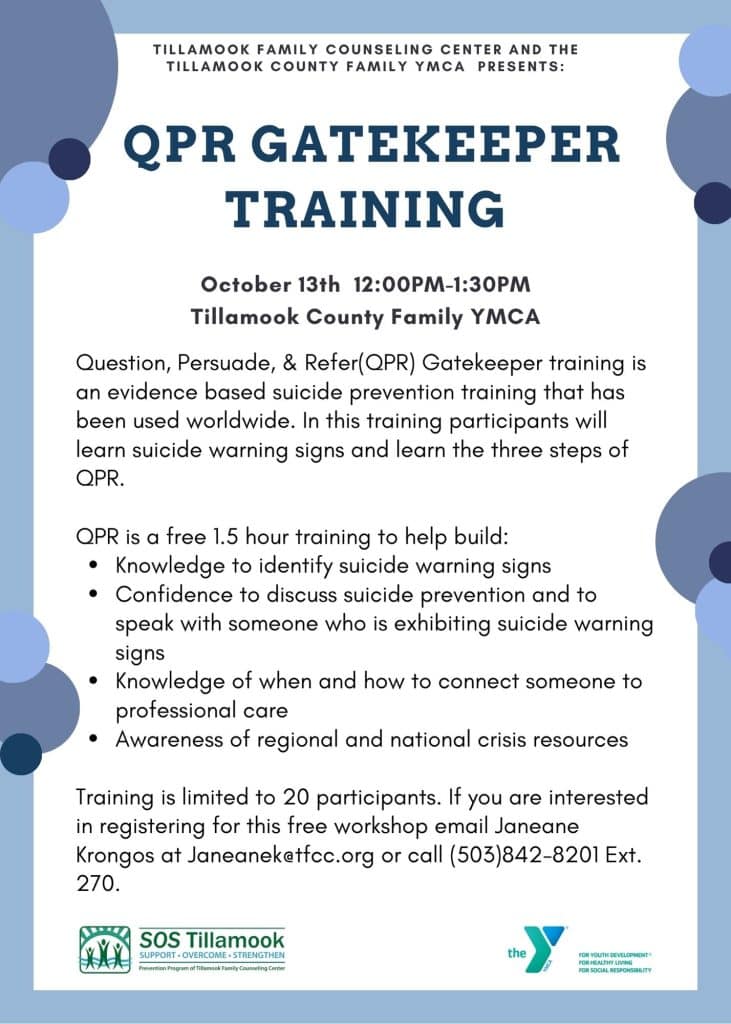
QPR Gatekeeping Training, October 13th

Janeane Krongos, TFCC’s Prevention Specialist, is pleased to be offering a free Question Persuade and Refer Gatekeeper training. The QPR Gatekeeper training will be presented in person at Tillamook County Family YMCA on October 13, from 12:00 to 1:30PM.

This training is a community mental health intervention that was listed on SAMSHA’s National Registry of Evidence Based Programs and Practices as an effective suicide prevention training. This training was designed to be beneficial for all adults, including parents, teachers, employers, health staff, and hospitality staff. It will be offered at no cost to the participant (registration for this training will be limited to 20 participants that reside or work in Tillamook County). To learn more about this free training opportunity, please email Janeane Krongos at Janeanek@tfcc.org.
Self-care workshop 9/29/23
Active Parenting October 2023
QPR Training October 2023

RECENT POSTS

April is Alcohol Awareness Month: Rethink the Drink

April marks Alcohol Awareness Month, a time to educate ourselves and our communities about the risks of alcohol misuse and its widespread impact on health and well-being. It is important for people to fully understand the risks of alcohol so that they can make informed decisions about alcohol consumption.

Alcohol remains a major public health concern both nationally and here in Oregon. In fact, excessive alcohol use is the third leading cause of preventable death among Oregonians, according to the Oregon Health Authority (OHA). Nationwide, alcohol is associated with over 178,000 deaths each year and is linked to more than 200 diseases and injury-related conditions.

As Sarah Ermer, Prevention Specialist at Tillamook Family Counseling Center (TFCC), explains, “You don’t have to have an alcohol use disorder or be binge drinking to experience harm from alcohol. A lot of people think the threshold for harm is being drunk, but that’s not the case.”

Read More »

Recognizing World Teen Mental Wellness Day in Oregon

March 2 marks World Teen Mental Wellness Day — a reminder that supporting young people’s emotional health is just as important as supporting their physical health.

Here in Oregon, thousands of youth are navigating anxiety, depression, academic pressures, and social challenges. In 2023 alone, more than 31,000 Oregon youth under 18 received Medicaid-funded mental health services, and 55,000 youth ages 12–17 are living with depression (Oregon State Fact Sheet). These numbers remind us that teen mental health challenges are not rare — they are something many families across our state, including here on the Oregon Coast, experience.

Read More »

Understanding Seasonal Affective Disorder on the Oregon Coast

Life on the Oregon Coast changes noticeably with the seasons. During the fall and winter months, shorter days and limited sunlight can affect mood and energy levels for many people.

Seasonal Affective Disorder (SAD), sometimes called seasonal depressive disorder, is a form of depression that follows a predictable seasonal pattern. Symptoms often begin in late fall or early winter and ease as daylight returns in spring. It’s more than just feeling “down” — SAD can make everyday tasks feel heavier and harder to manage.

Read More »