Prevention Education Opportunities May
SOS Tillamook The Tillamook Family Counseling Center is pleased to announce that there will be a variety of prevention programs that are offered to community members in the month of May. To learn more about the programs please see the brief description of events and flyers in this post. If you should have questions about the prevention programs, please email Janeanek@tfcc.org
- Question Persuade Refer Gatekeeper Training:
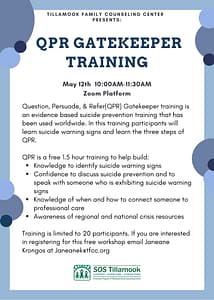
The QPR Gatekeeper training will be presented virtually using the Zoom platform on May 12th, from 10:00 to 11:30AM. This training is a community mental health intervention that was listed on SAMSHA’s National Registry of Evidence Based Programs and Practices as an effective suicide prevention training. This training was designed to be beneficial for all adults, including parents, teachers, employers, health staff, and hospitality staff. This training will be offered at no cost to the participant (registration for this training will be limited to 20 participants that reside or work in Tillamook County). To learn more email Janeanek@tfcc.org. - Introduction to Underage Substance use and Problem Gambling Prevention Presentation:
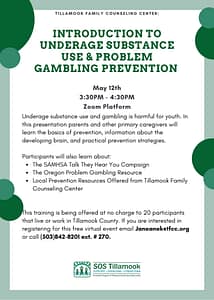
The Introduction to Problem Gambling Prevention presentation will be presented by the Tillamook Family Counseling Center. This presentation will be presented virtually using the Zoom platform on May 12th, from 3:30-4:30PM. Participants who attend this training will learn the basics of prevention, prevention tips, and helpful prevention resources. This training was designed to be beneficial for parents, caretakers, or other caring adults. This training is being offered at no charge to 20 participants that live or work in Tillamook County. To learn more email Janeanek@tfcc.org. - Tillamook County Suicide Prevention Rock Painting Event:
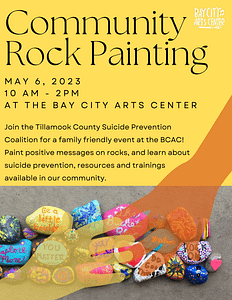
This activity will take place on May 6th, 2023, from 10-2PM at the Bay City Arts Center. Community members who attend the event will have a chance to interact with other community members, paint messages of hope on rocks, and have opportunities to interact with coalition members. The event will feature a prevention table with prevention information from community partners. To learn more about email Janeanek@tfcc.org. - Self-Care workshop:
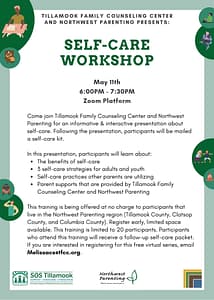
Come join Tillamook Family Counseling Center and Northwest Parenting for an informative & interactive presentation about self-care. Following the presentation, participants will be mailed a self-care kit. In this presentation, participants will learn about: the benefits of self-care, 3 self-care strategies for adults and youth, self-care practices other parents are utilizing, and Parent supports that are provided by Tillamook Family Counseling Center and Northwest Parenting. To learn more email Melissacs@tfcc.org.
-Published April 12, 2023