 Each May, we recognize Mental Health Awareness Month to help connect and support one another. This year’s national theme from Mental Health America—“More Good Days, Together”—reminds us that mental health isn’t about perfection. It’s about finding small, meaningful moments of stability, connection, and support in our daily lives.
A “good day” can look different for everyone. It doesn’t have to mean feeling happy or productive, it might simply mean feeling calm, manageable, or getting through a difficult day.
In a small community like Tillamook County, where we rely on one another in both visible and quiet ways, those small moments matter.
What Does a “Good Day” Look Like?
For many people, a good day is made up of simple, everyday experiences. Terri Syverson, LPC, CADCIII, Associate Director of Clinical Services, shares:
A “good day” might mean going for a walk, or noticing, “I was able to use my resources to get through that difficult situation.”
These moments may seem small, but they are meaningful signs of resilience and progress.
Small Steps Toward More Good Days
Mental Health America emphasizes that improving mental health often starts with small, realistic steps, especially when things feel overwhelming.
Terri encourages a similar approach, reminding us that “we are all doing the best we can with what we have in the moment.” She also highlights the importance of choosing to try again rather than giving up after one attempt, and remembering that meaningful change takes time.
Other small steps can include:
- Getting outside for fresh air or a short walk
- Checking in with yourself and how you’re feeling
- Reaching out to a friend, neighbor, or family member
- Taking one manageable step instead of trying to fix everything at once
Why “Together” Matters
Having more good days isn’t something we do alone. Connection is one of the most important parts of mental health. Small moments, like checking in on a neighbor or having an honest conversation, can reduce stress and remind us we’re not alone.
In Tillamook County, community is one of our greatest strengths. Whether it’s showing up for local events or taking the time to listen, these connections help make more good days possible for everyone.
Support Is Here
Mental health looks different for everyone, and there’s no one “right” path forward. What matters is finding what works for you and knowing that help is available.
Tillamook Family Counseling Center is here to support individuals and families at every stage, whether you’re reaching out for the first time or continuing your mental health journey.
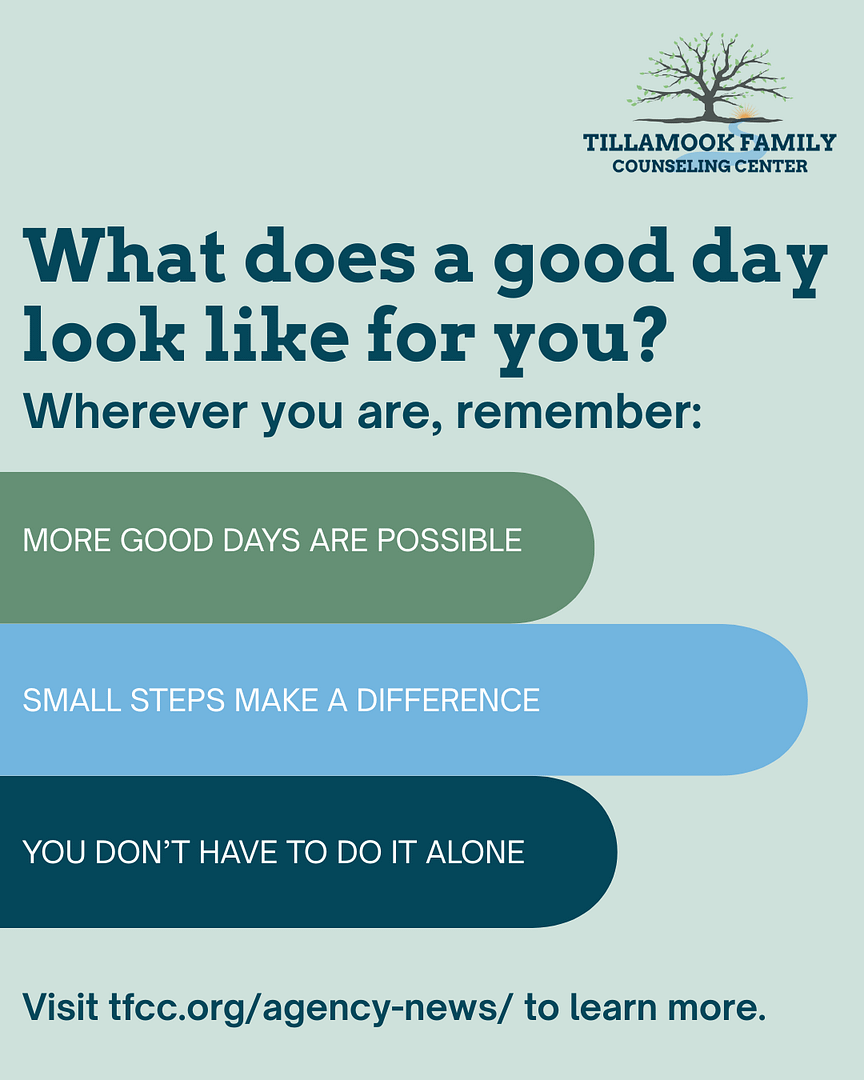
More Good Days, Together
This month, we invite you to take a moment to reflect: What does a good day look like for you?
Wherever you are, remember:
- More good days are possible
- Small steps make a difference
- You don’t have to do it alone
Together, as a community, we can create more good days—for ourselves and for each other.
Additional Resources:
- Tillamook Family Counseling Center – Call TFCC at 503-842-8201 to schedule an appointment or learn more about our behavioral health programs and services.
- TFCC Crisis Services – Services are available to support individuals experiencing a mental health crisis. Services are available 24 hours/day, 7 days/week, and can be accessed by calling (503) 842-8201 or 1-800-962-2851.
- 2026 Mental Health Month Action Guide – Get access to online activities, articles, printable tools, and practical resources with our 2026 Mental Health Month Action Guide.
- Mental Health America Screening Tools – Take a free, private screening at mhascreening.org to understand what you’re experiencing and explore next steps.
- 988 Suicide & Crisis Lifeline – Call or text 988 any time for 24/7 support from trained crisis counselors. Spanish-language support is also available at 1-888-628-9454.